The Trump administration wants to build an American drone industry. But investment announcements, government contracts, and restrictions on foreign competitors don’t automatically create a competitive marketplace. America’s independent drone operators are still waiting to see where they fit into the plan.
____________________________________________________________________
A November 2 article by DRONELIFE, Is Trump’s Plan to Build a U.S. Drone Industry Working? highlights what appears to be early progress. Skydio has announced a $3.5 billion domestic investment commitment. Other American manufacturers are attracting capital, and the Pentagon is awarding significant procurement contracts.
Those developments deserve recognition. America needs a strong domestic manufacturing base and secure supply chains.
But there’s a much bigger question that deserves attention: Is the administration building an American drone industry, or simply building an American defense drone manufacturing industry?
There is a difference. The commercial drone economy includes far more than the companies that manufacture aircraft. It includes thousands of independent pilots, small businesses, inspectors, surveyors, photographers, agricultural operators, engineers, and public safety professionals who turn drone technology into actual economic value.
But it is the end users whose interests are completely ignored by Washington.

____________________________________________________________________
The unspoken problem: Military dominance doesn’t equal commercial dominance
The Skydio investment announcement is an important development for domestic manufacturing. But the success of one manufacturer, particularly one with substantial government and military business, cannot be used as the measuring stick for the health of the entirety of the American drone industry. As a matter of fact, Adam Bry publicly stated Skydio has no interest in the professional or consumer markets.
This is where the distinction between military dominance and commercial dominance becomes critical.
Military and government procurement operate under very different conditions than the commercial marketplace. Government contracts, dedicated funding, and national security priorities can support manufacturers in ways that independent businesses simply cannot replicate.
A product that makes sense for a military contract rarely makes sense for a commercial drone service provider.
Commercial operators need affordable equipment, dependable performance, specialized capabilities, readily available replacement parts, and long-term support. They need equipment that makes economic sense for an inspection company, a small surveying business, or an independent creative pilot trying to build a sustainable operation.
DSPA has often taken a critical position on many U.S. drone manufacturers and organizations that advocate on their behalf. And it’s not unwarranted.
The concern is that government policy is being used to create a market for favored domestic manufacturers while disregarding the commercial marketplace and its ability to determine which products best serve its customers. No one in D.C. seems to want to hear this.
Skydio and other U.S. manufacturers deserve to have every opportunity to compete. And the United States needs a strong UAS manufacturing base. But these companies should not be granted exclusive access to a commercial marketplace simply because its military and government relationships position it favorably in Washington.
Winning government contracts is not the same as winning over commercial customers. And being an American manufacturer does not automatically make a product the best choice for American businesses.
There is also an important distinction between aircraft security and operational security. DSPA and others have pointed to the San Francisco Police Department’s Drone as First Responder video-feed exposure as an example. The incident involved Skydio equipment, but the underlying issue concerned the department’s handling of its technology and IT security. This illustrates why cybersecurity assessments must examine systems, configurations, data practices, and operators rather than assume that a manufacturer’s country of origin determines security.
The point isn’t simply to criticize one manufacturer. It’s to recognize that no manufacturer should be above scrutiny, and no manufacturer should receive an automatic presumption of security. Nor should it automatically receive presumption of security risk based on country of origin. Demonstrative and verifiable security concerns must be part of the discussion.
American manufacturing deserves an opportunity to compete. But it should also be required to compete on performance, reliability, security, availability, and price.
____________________________________________________________________
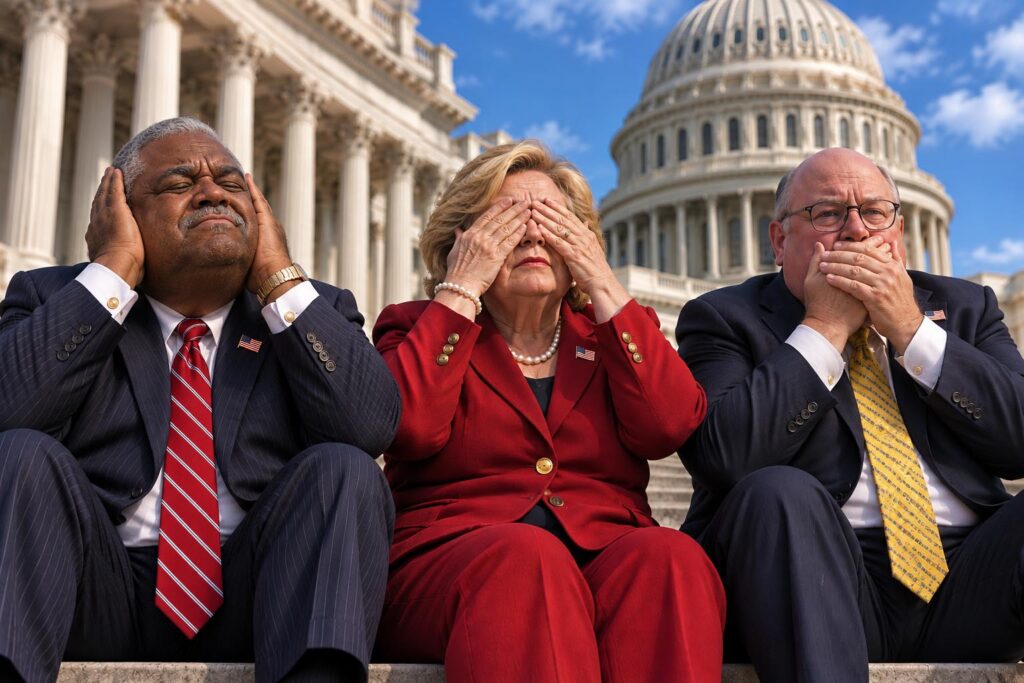
The influence problem: Who gets heard in Washington?
One of the biggest problems facing the drone industry is the formidable imbalance of representation in Washington.
Manufacturers have lobbyists, government relations teams, and their well-funded industry associations influencing drone policy. Independent drone service providers rarely have those resources, yet they’re the ones who suffer the most when regulations restrict access to the equipment their businesses desperately depend on.
DSPA was created in 2020 to give these operators a voice. We directly represent nearly 34,000 FAA-certificated commercial Remote Pilots nationwide, with a broader reach of over 100,000 drone service provider businesses through our industry partnerships such as Pilot Institute. These are the small businesses and independent operators performing critical work in construction, infrastructure inspection, agriculture, public safety, the creative fields, and countless other industries.
While we’ve made some progress reaching lawmakers, we still lack the resources and strong D. C. presence to compete with the well-funded manufacturing interests.
Our position is simple: America can strengthen domestic drone manufacturing without sacrificing the hundreds of thousands of small businesses that depend on affordable, reliable foreign-made drones. Supporting American manufacturers should never come at the expense of American small businesses, their employees, or the recreational drone community.
____________________________________________________________________
Regulators cannot manufacture a competitive industry through restrictions alone
The FCC’s equipment authorization policies, tariffs, and broader federal restrictions (current and proposed) are theoretically intended to strengthen national security and domestic manufacturing. But in reality, restricting foreign technology while affordable, capable alternatives don’t exist, forces American drone service providers into an impossible position.
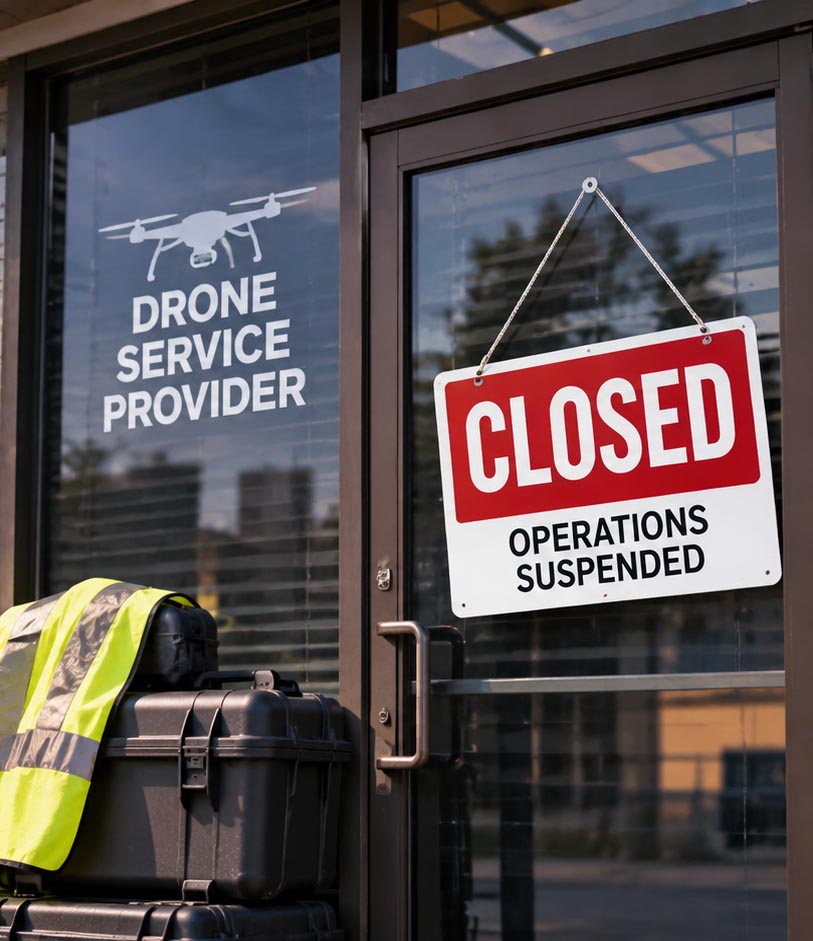
Small businesses have invested thousands of dollars in aircraft, batteries, equipment, training, and specialized workflows. When those aircraft can no longer be purchased, repaired, replaced, or even supported, operators face canceled contracts, lost revenue, and the very real possibility of closing their doors. Even a single grounded aircraft can mean thousands of dollars in lost business.
And when no comparable replacement aircraft exists, spending more money isn’t even an option.
Government policies that force American businesses to lose customers, lay off employees, or shut down entirely aren’t strengthening the American drone industry. They’re destroying the very businesses that built it.
____________________________________________________________________

The infrastructure problem: What happens when affordability gets pushed aside?
One of the most overlooked consequences of prioritizing domestic manufacturing over commercial viability is the potential impact on public safety.
Drones are essential tools for inspecting bridges, power lines, pipelines, railways, utilities, and other critical infrastructure. They help identify hazards while keeping workers out of dangerous situations.
But these benefits depend on affordable, capable aircraft and a healthy commercial drone industry. Restricting access to that technology can delay inspections, limit critical capabilities, and leave dangerous conditions undetected. What is the human cost of prioritizing domestic drone manufacturing while making these tools less accessible to the professionals protecting our infrastructure?
Not every drone inspection prevents an accident or saves a life. But limiting access to proven technology increases the risk that problems go unnoticed until it’s too late.
Protecting American manufacturing should never come at the expense of public safety.
____________________________________________________________________
Investment announcements aren’t the same as market competition
As DRONELIFE pointed out, announced investments and government contracts don’t necessarily translate into production capacity or affordable commercial drones.
Military and commercial operators have very different needs. A drone built for a government contract is almost always too expensive or lacks the capabilities needed for everyday commercial work.
For small drone businesses, that means higher equipment costs, fewer available aircraft, delayed inspections, lost contracts, and reduced profitability. If an aircraft fails and no comparable replacement or spare parts are available, an operator may be forced to turn down work or shut down entirely.
Success shouldn’t be measured by government contracts or investment announcements. It should be measured by whether American manufacturers can deliver safe, capable, affordable aircraft, with reliable parts and support, all before existing commercial fleets become unusable. Government policy shouldn’t determine which manufacturers survive at the expense of American small businesses.
For a commercial UAS marketplace to succeed, it must be allowed to determine which products are the best products for the job.
____________________________________________________________________
What DSPA is asking for
DSPA isn’t arguing against American manufacturing or national security. It is arguing that those goals should not come at the expense of American drone operators.
Its advocacy calls for a more balanced approach:
- Risk-based cybersecurity: Evaluate actual security vulnerabilities, data handling, and technical safeguards rather than relying exclusively on country of origin.
- Competitive markets: Preserve access to capable equipment when domestic alternatives cannot meet operational or financial requirements.
- Meaningful operator representation: Include independent service providers in regulatory and legislative discussions.
- Regulatory predictability: Give businesses reasonable transition periods when necessary and clear guidance before changing equipment requirements.
- Domestic manufacturing that benefits everyone: Encourage American innovation and production while allowing manufacturers to earn market share through competition.
- Public safety through commercial viability: Recognize that affordable, accessible drone technology supports infrastructure inspections, emergency response, and other services that protect lives.
These aren’t unreasonable demands. They’re the foundation of a functioning commercial industry. And without these demands being met, the Drone Service Provider industry will be critically and adversely affected. And it’s not an overstatement to say that current tack in D.C. will destroy the Drone Service Provider industry in this country. And there doesn’t seem to be a single elected or appointed official in D.C. that wants to hear this.
____________________________________________________________________
Final word: the true measure of American drone dominance
This administration deserves credit for prioritizing domestic drone manufacturing. But success won’t be measured by billions in investments, Pentagon contracts, or restrictions on foreign products. It will be measured by whether American manufacturers can compete while supporting the businesses that depend on their technology.
You cannot build a thriving drone industry by supporting manufacturers while sacrificing the very commercial operators who actually use their products.
American Drone Dominance should mean more competition, affordable technology, safer infrastructure, stronger emergency response, and greater opportunities for American small businesses. DSPA and the vast majority of the nearly 34,000 Remote Pilots we represent support American Drone Dominance. But not at the expense of the American Drone Service Provider industry.
There is room for a regulatory compromise that strengthens domestic manufacturing without destroying existing businesses. But commercial operators must have a meaningful seat at the table.
Not after the rules are written. Not after the damage is done. Now!
____________________________________________________________________
About the Drone Service Providers Alliance
The Drone Service Providers Alliance (DSPA) advocates for professional drone service providers and works to ensure operators and small businesses are represented in regulatory, legislative, and industry policy discussions affecting the commercial UAS community.